In the rapidly evolving world of digital marketing, the line between "Keywords" and "Concepts" has blurred. Ten years ago, SEO was a simple game of matching text strings. Today, it is an advanced architecture of semantic relationships. Understanding the difference between Keyword Clustering and Semantic Search is no longer optional—it is the difference between ranking on page one or disappearing into the void.
Ready to move beyond strings? Try our free AI Keyword Clusterer to group your keywords by semantic intent automatically.
Automate Your Keyword Research
Stop sorting spreadsheets manually. Try our Free AI Keyword Clusterer to group thousands of keywords by search intent in under 100ms.
The Death of the Single Keyword
For decades, SEO specialists focused on "the keyword." We would pick a single phrase like "best marathon training shoes," check its search volume, and build a page optimized specifically for those four words. This led to a fragmented web where dozens of pages competed for slight variations of the same intent.
However, Google's Hummingbird, BERT, and more recently, their agentic AI models, have changed the game. They no longer look for the exact string; they look for the semantic entity. This is where the concepts of clustering and semantic search begin to diverge and intersect.
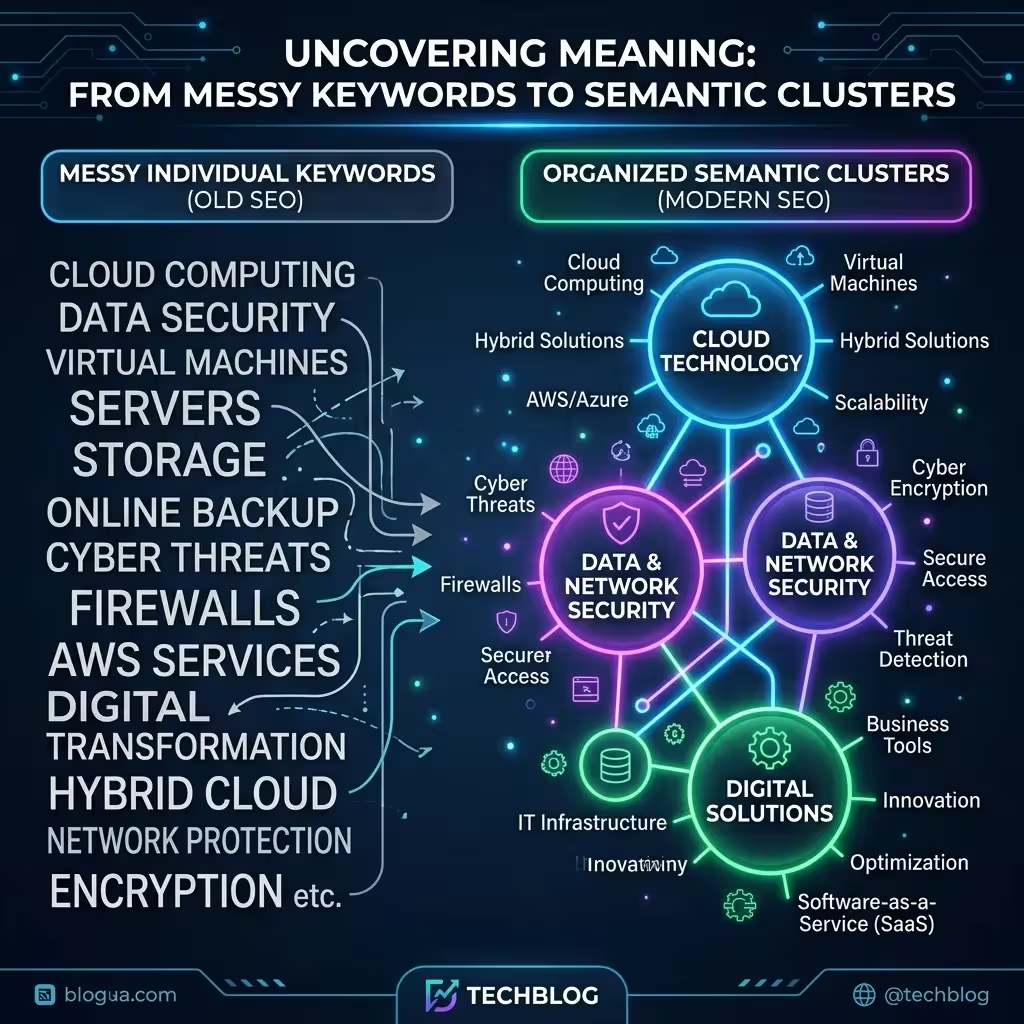
What is Keyword Clustering?
Keyword clustering is a strategic grouping of keywords that share the same user intent. Instead of writing 10 articles for 10 similar keywords, you write one high-authority "Pillar Page" that covers the entire cluster. This signals to Google that your content is comprehensive and authoritative.
For example, if your seed keyword is "Digital Marketing," a cluster might include:
- Digital marketing for small business
- Online marketing strategies 2026
- Internet advertising tips
- Digital growth hacking tactics
By clustering these, you avoid keyword cannibalization—the phenomenon where your own pages compete against each other in the search results, ultimately lowering the rank for both.
Understanding Semantic Search
While clustering is a strategy, Semantic Search is the technology that makes it possible. Semantic search refers to the ability of search engines to understand the contextual meaning of terms. It moves away from keyword matching and toward Intent Discovery.
When a user searches for "how to fix a leaky faucet," semantic search understands they are looking for a tutorial. When they search for "plumber near me," it understands they are looking for a service. Even if the words were different—e.g., "water dripping from sink pipe"—semantic search knows these concepts are identical in intent.
Why Clusters Win in 2026
As we enter the era of Agentic AI, search engines are becoming "Answer Engines." They don't want to provide a list of links; they want to provide a comprehensive solution. Websites that are built using semantic clusters are favored because they provide a logical content roadmap for the AI to follow.
Benefits of a cluster-first approach include:
- Topical Authority: You become the "source of truth" for a specific niche.
- Better Internal Linking: Clusters create a natural hierarchy of links, helping crawlers find your content.
- Increased User Dwell Time: When a user finds a comprehensive cluster, they stay on your site longer, exploring related topics.
Automating the Architecture
The biggest hurdle to semantic SEO is the sheer volume of data. Professional SEO teams are no longer using Excel for this. They are using Automated Semantic Analyzers that can take a raw export from Ahrefs or SEMrush and turn it into a content calendar instantly.
By automating the clustering process, you remove human bias. A human might think two keywords are different, but an AI trained on trillions of tokens knows that they share the exact same search engine results page (SERP) features.
Build Your Topical Authority Today
Stop guessing which keywords to target. Use our AI-powered engine to turn your keyword list into a high-ranking content silo in seconds.
Cluster My KeywordsNeed to analyze your competitor's clusters? Check out our SEO Summary Tool to instantly scrape metadata and ranking metrics for any URL.