How to Do Keyword Clustering in 2026: Step-by-Step Tutorial
If you are still managing your optimization strategy by trying to map one query to one page, your organic strategy is falling behind. Modern search frameworks prioritize high-efficiency, semantically rich topic nodes. To compete effectively, you must understand exactly how to do keyword clustering to turn thousands of loose query datasets into a structured site layout.
Many growth marketers spend hours trying to configure a manual keyword grouper excel template or building basic regex macros to group search phrases together. In this comprehensive keyword clustering tutorial, we will move past legacy processes and look at a fast, automated approach to clustering your search terms at scale.
The Problem with the Traditional Keyword Grouper Excel Workflow
For years, the standard approach to grouping keywords involved exporting a massive csv file from an external platform, opening it in Microsoft Excel, and spending hours manually sorting rows using text filters. This approach introduces major structural issues into modern operations:
- Missing Hidden Content Connections: Simple string filters miss synonyms and related variations that share search intent but use completely different words.
- Scaling Bottlenecks: Manually sorting through thousands of rows becomes highly inefficient as your content inventory expands.
- Outdated Platform Constraints: Legacy enterprise utilities like Semrush keyword clustering offer baseline automation but often impose usage caps or require expensive subscriptions.
Skip the Complex Spreadsheets Entirely
Don't waste time troubleshooting slow pivot tables or writing complex custom script loops. Use our high-speed, local Llama 3 engine to clean, parse, and organize up to 10,000 keyword rows in under 60 seconds.
Run AI Keyword Clusterer Free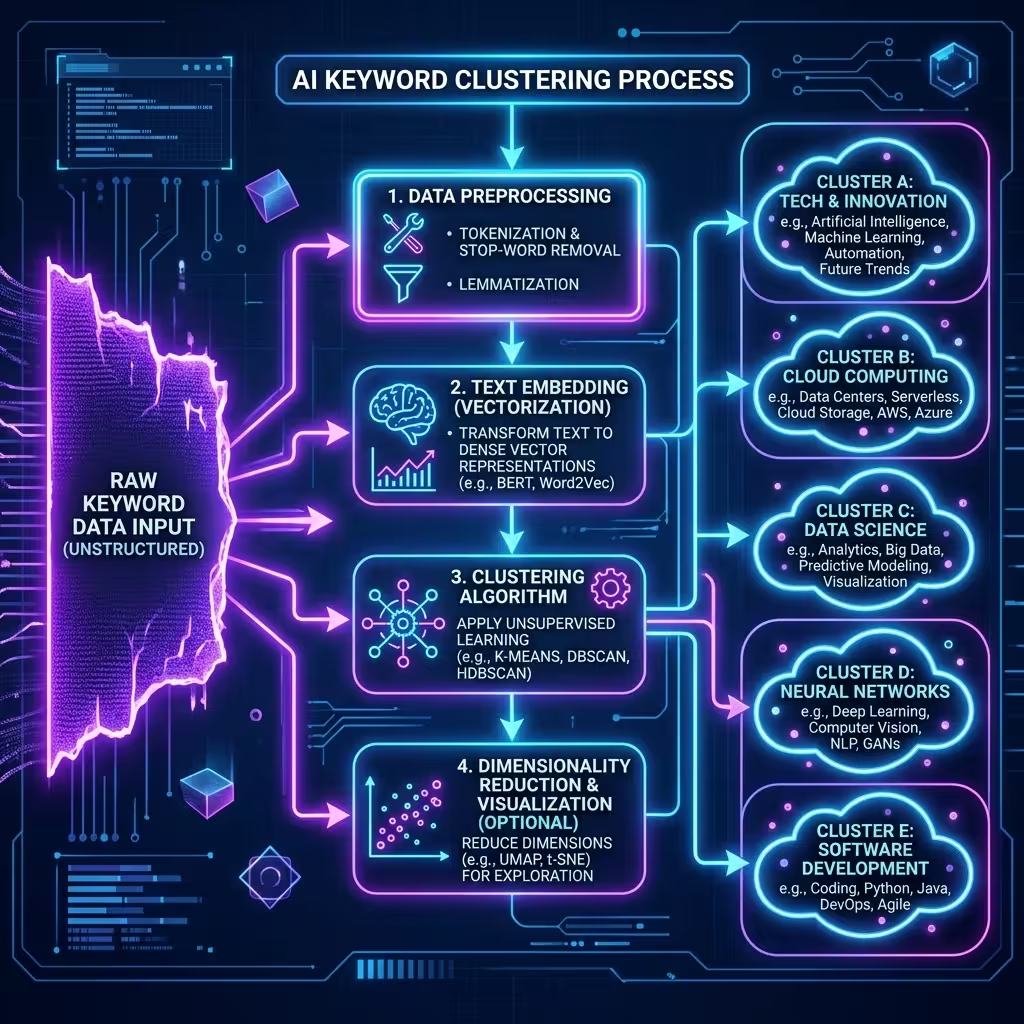
How to Cluster Keywords: A Step-by-Step Guide
Let's walk through a clear, actionable workflow to cluster your keyword lists using modern best practices.
Step 1Extract and Clean Your Search Term Arrays
Start by downloading your query performance data from Google Search Console or your preferred keyword research tool. Gather your parameters into a clean file, stripping out unnecessary tracking metadata to focus on your core metrics: search term strings, impressions, and click counts.
Step 2Identify Intent and Core Head Terms
Locate your high-volume, broad informational head terms. These terms will serve as the anchor anchors for your primary category directories. For example, if you manage a file management platform, a high-volume phrase like *"file transformer"* establishes a clear primary cluster hub.
Step 3Group Long-Tail Phrases into Intent Buckets
Group supporting long-tail terms under your primary category heads based on user intent. Focus on how users approach the problem—ensure informational queries are grouped into resource assets, while transactional variations are routed straight to your feature templates.
Step 4Establish Clean Internal Silo Links
Once your groups are organized, use them to build clean internal linking networks. Link your secondary supporting pages directly back to your central pillar resource using targeted anchor texts. This maps out clear indexing paths for crawlers, reinforcing your domain's topical authority.
Automating the Workflow: Code and Machine Learning
For engineering teams looking to build in-house solutions, running keyword clustering via Python offers a great way to scale data processing. By leveraging vector parsing libraries and string distance algorithms, you can build automation scripts that handle large term arrays programmatically:
# Programmatic Intent Clustering Example
import tokenizers
from sklearn.cluster import AffinityPropagation
# Define tracking targets
words = ["keyword research clustering", "how to cluster keywords", "seo content optimization"]
# [Your automated processing logic transforms raw datasets into structured arrays here]
Streamlining Your Ongoing Operations
Transitioning from manual data sorting to automated topic grouping helps you build a leaner, higher-performance site structure. By moving away from rigid manual spreadsheets and focusing on user intent patterns, you establish a technical content roadmap that scales naturally alongside your platform.
Frequently Asked Questions (FAQ)
How do you cluster keywords manually?
The traditional manual approach involves exporting CSV files to Microsoft Excel and spending hours sorting rows using basic text filters. This often misses semantic variations and fails to scale.
What is the best way to group keyword lists?
The best approach is to identify core informational head terms, group supporting long-tail phrases into intent buckets under those head terms, and map them using an automated AI tool to save time.
Can you cluster keywords programmatically?
Yes, engineering teams can use Python libraries like sentence-transformers and clustering algorithms like AffinityPropagation to handle large term arrays programmatically without manual spreadsheets.